

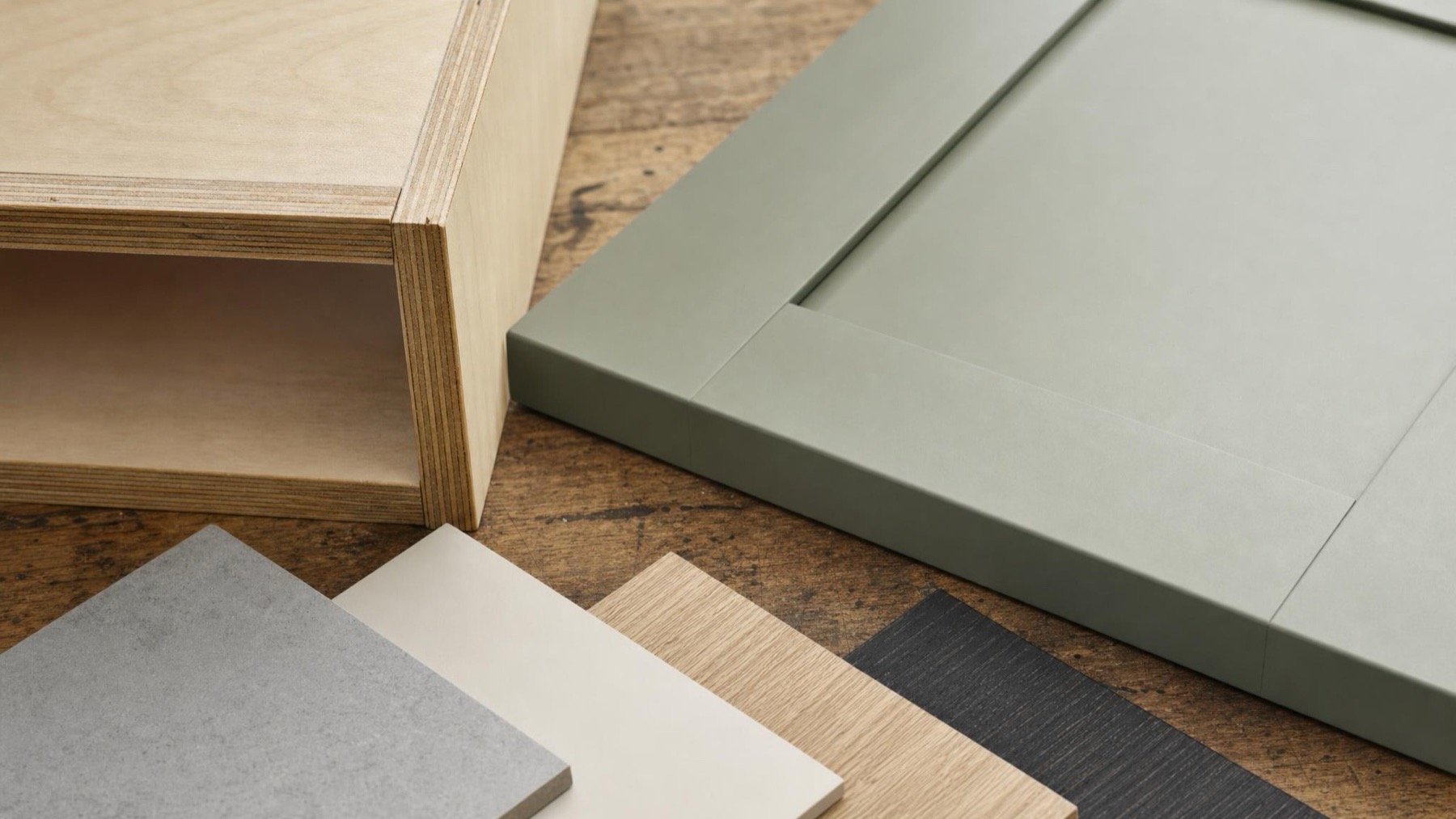
A cabinet is three decisions, the box, the door and the finish, and each one ages differently.
Two cabinet quotes can show the same door style and the same colour and still describe very different kitchens. The difference hides inside the box. Kitchen cabinet materials are really three separate choices: what the box is made of, what the door is made of and what covers the surface. Each one affects how the kitchen handles steam, spills and years of busy drawers.
When we specify cabinets for kitchens in Oakville, we ask suppliers to name all three, and we suggest you ask for the same. Here is what the common materials mean, drawn from the Canadian Kitchen Cabinet Association's guide and from what matters once the kitchen is in use.
The box and what sits under the coating
The box does the structural work. The association's guidance states that plywood is used for shelving, doors and cabinet boxes. Plywood is a common request for the sink base, where a slow drip is most likely to show up first.
Many cabinets use a particleboard or fibreboard core under a laminate or melamine surface. Quality in those cores varies widely, so the core deserves a direct question. The association's guidance is to ask about the substrate when selecting a laminate cabinet, meaning the cabinet box under the coating. Ask whether that box is plywood, particle board or fibreboard, and ask the supplier to put the answer in writing.
The door and why some panels crack
Doors take the most handling and the biggest swings in humidity. A traditional five piece solid wood door has a panel that floats in its frame so the wood can move with the seasons. The association's guidance says MDF is more stable than solid wood and stands up better to changes in heat and humidity. An MDF door is built so the panel and frame move together as one unit, which keeps the joint around the panel steady.
That makes MDF a sound choice for painted shaker doors, where a crack line around a solid wood panel shows clearly through the paint. Stained doors are a different story. MDF has no grain to stain, so a stained kitchen uses solid wood or wood veneer.
The finish and how it ages
The association notes that melamine can chip and is susceptible to water damage. Its guidance also notes that laminate is difficult to repair if it gets damaged, and that replacement is usually recommended. Thermofoil resists moisture, but the association cautions that it should not be installed too close to an oven or other heating source, and heat shields can protect it.
| Finish | Where it fits | What to plan for |
|---|---|---|
| Melamine | Cabinet interiors and simple fronts | Edges near the sink and dishwasher |
| Laminate | Busy kitchens that need easy cleaning | Replacement rather than repair after damage |
| Thermofoil | Smooth fronts in damp rooms | Distance or heat shields near the oven |
| Painted MDF | Painted shaker and slab doors | Touch up paint for chips over time |
Ask for materials in writing
A renovation quote is not useful unless the scope and allowances are clear. For cabinets, clear means the quote names the box material, the door construction, the finish, the drawer box and the hinge and slide hardware. If one quote says plywood boxes and another only says cabinets, the two prices may describe very different cabinets.
In Oakville, a straight cabinet swap is light on paperwork. The Town says permits typically are not required for replacing existing cabinetry, sinks, faucets, toilets and cosmetic changes to surfaces. Moving the sink or a wall to fit a new layout is a different project, and our kitchen planning checklist covers that side.
Choose the box before the colour
Bring the quotes or samples you have and we will walk through the box, door and finish on each one with you, then build those choices into a written kitchen scope.