

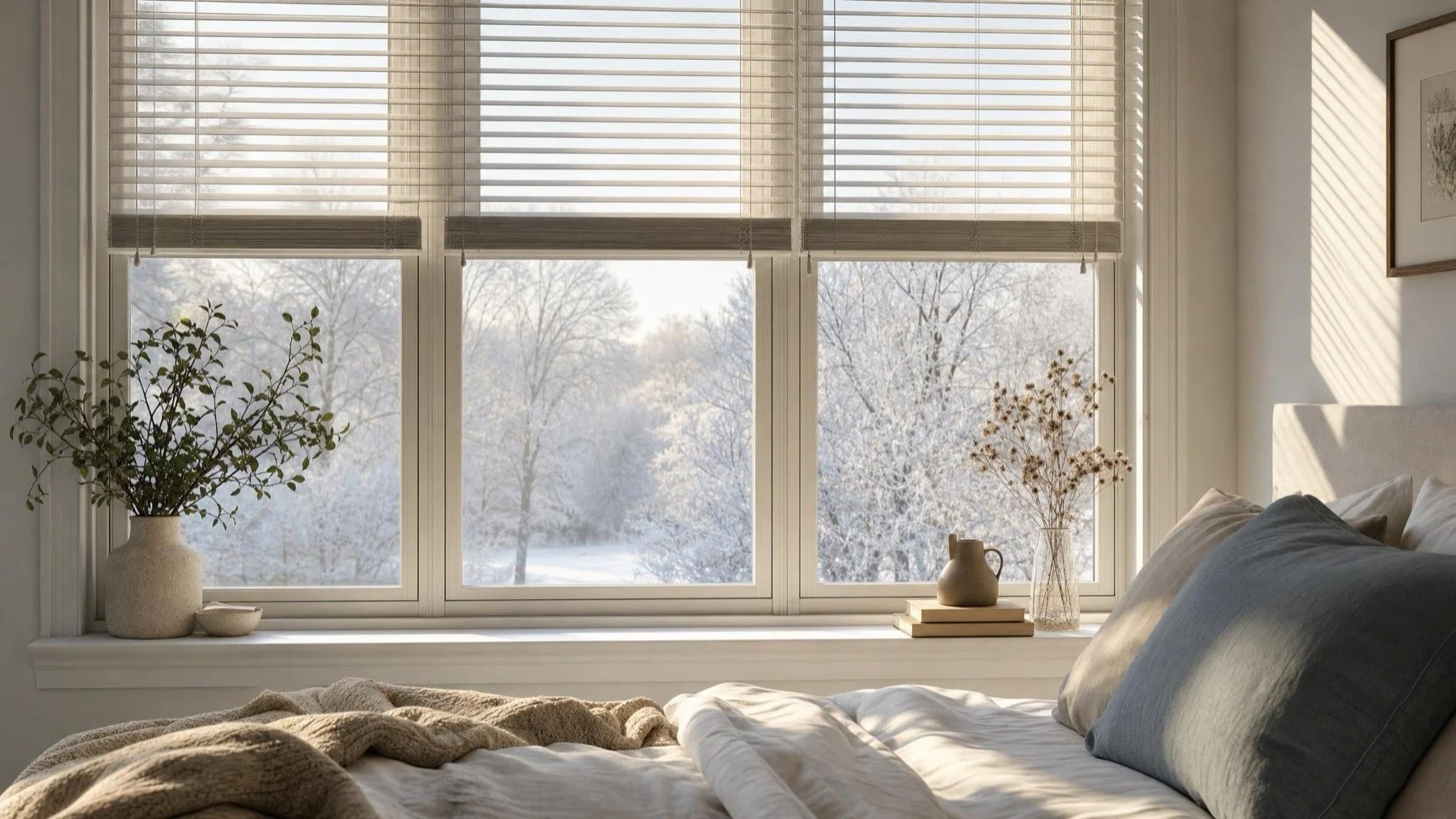
From inside the room, the glass choice shows up as comfort near the window, quieter mornings and less fog on cold days.
The short answer on triple pane vs double pane windows is that the third pane earns its place in the rooms where you feel the window most: a bedroom on a busy street, a north facing family room or a reading chair pulled close to the glass. Elsewhere, a good double pane unit does the job. The choice gets easier when you look at it from inside the room rather than from a product sheet.
We replace windows as part of interior renovations, so we see the glass decision alongside trim, sills, blinds and the wall finish around each opening. Our window and door installation in Oakville covers that service. This guide compares the two options on comfort, noise, condensation and planning.
What the third pane changes
Natural Resources Canada puts it plainly in its window technology guidance: the more glazing layers, the better. As its example, that guidance notes that triple glazed products have three layers of glass. In a bedroom on a busy street, many homeowners choose that third pane for quiet as much as for energy.
Inside the house, that shows up in three ways. The inner pane stays closer to room temperature, so sitting beside the window in January feels more comfortable. Street noise drops, which matters most in bedrooms. And warmer glass is less prone to fogging on cold mornings. The tradeoffs are weight and frame depth. A triple pane unit is heavier and thicker, which affects the hardware on large opening sashes and how the frame sits inside your wall.
Condensation, blinds and the room around the window
Natural Resources Canada guidance explains that the risk of condensation increases as the weather gets colder or the inside humidity rises. It also notes that deep window sills, closed drapes and blinds, and even nearby furniture can block air movement and allow cool air to pool near a window.
That second point is an interior design question. If you plan deep sills, heavy drapes or a window seat, the glass has to work harder, and a triple pane unit gives you more margin. If you plan new custom blinds with the windows, measure after installation, because a new frame changes the opening.
Where each option fits
| Room or situation | Double pane | Triple pane |
|---|---|---|
| Bedroom facing a busy road | Workable | Strong choice for quiet |
| North or east facing living space | Workable | Better comfort near the glass |
| Bathroom or kitchen with high humidity | Workable with good ventilation | Extra margin against fogging |
| Large sliding or tilt and turn units | Lighter to operate | Check hardware for the added weight |
NRCan's guidance for windows, doors and skylights advises installing windows with higher insulation values on the eastern and northern sides of a house to reduce heat loss. Some homeowners mix the two, using triple glazing on those sides and double glazing where the sun does more of the work.
Whichever you choose, compare the rated performance values on each product's label rather than the pane count alone.
Plan around permits and heritage
Replacing a window in the same opening is the simpler path. Making an opening larger or changing the look of the front of the house brings in more review. The Town of Oakville's interior alteration guidance states that properties on the town's heritage registry require heritage approval. Check the registry before you order.
Design decisions should be settled before the related trade reaches the job site. For windows, that means choosing the glazing, the interior trim profile and the blind or drapery plan together, so the installer, the finish carpenter and the painter each know what they are working toward.
Choose the glass room by room
Tell us which rooms feel cold, noisy or foggy and we will help you decide where a third pane earns its place and where double glazing is enough, along with the trim and blind work around each window.